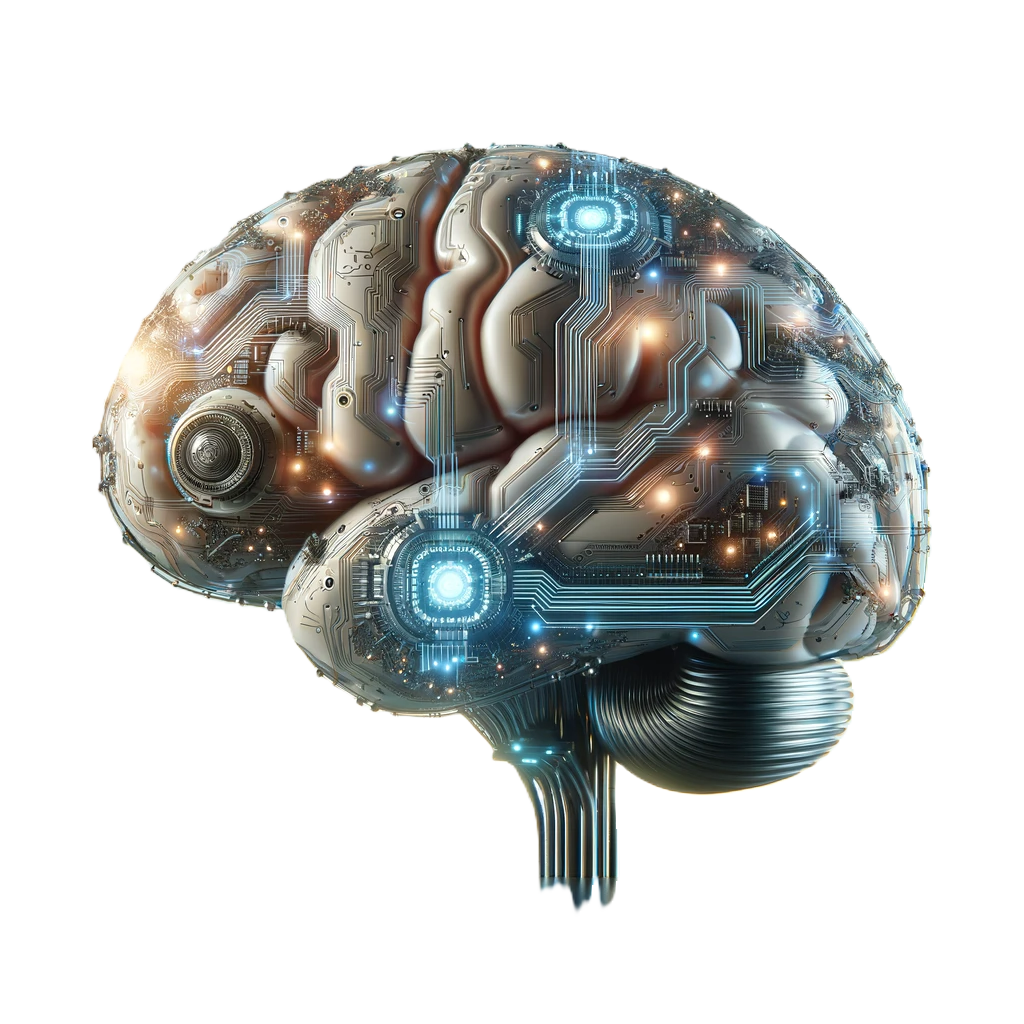

Elon Musk’s brainchild, Neuralink, aims to redefine the future of human cognition and communication. With its groundbreaking technology, Neuralink is developing ultrafine ‘threads’ that can be woven into your brain to ‘listen in’ on your neurons. The primary goal? To allow humans to control machines using just the power of thought.
How Does Neuralink Work?
The fundamental component of Neuralink’s technology is the N1, a 4mm-square chip that gets implanted into the skull. Attached to the chip are wires thinner than a human hair, which extend into the brain. These threads are strategically placed near crucial parts of the brain and are capable of detecting messages as they are relayed between neurons. They record each impulse and can even stimulate their own. According to Neuralink, the N1 can connect with 1,000 different brain cells, and a patient might have as many as 10 N1 chips implanted.
The chips connect wirelessly to a wearable device that hooks over the user’s ear, much like a hearing aid, and contains a Bluetooth radio and a battery. Neuralink envisions the first devices will be implanted via traditional neurosurgery, but eventually, the chips will be inserted safely and virtually painlessly through small incisions by a robot surgeon. Learn more about the process here1.
Applications and Potential Risks
Neuralink’s technology could be instrumental in treating neurological disorders rooted in the brain’s inability to connect with nerves around the body, including conditions like epilepsy, Parkinson’s disease, and paraplegia and quadriplegia following spinal nerve injuries. However, like any groundbreaking technology, Neuralink comes with potential risks. The threads connecting electrodes to the chip need to be flexible to minimize damage to surrounding brain tissue, and the device implantation poses risks for patients with compromised immune systems. There are also ethical considerations regarding the monitoring of someone’s every thought, deed, and emotion1.
FDA Approval and Future Directions
Recently, Neuralink received FDA clearance for its first-in-human clinical trial, a significant milestone for the company. The FDA approval “represents an important first step that will one day allow our technology to help many people,” Neuralink said. However, the approval comes amidst federal scrutiny over the company’s handling of animal experiments and concerns around the company’s speed in conducting these experiments2.
The benefits of Neuralink extend beyond the disabled. Musk envisions the technology becoming commonplace, transforming humans into cyborg beings that can achieve a symbiosis with artificial intelligence. Musk believes this will be essential to the survival of our species1.
Despite some controversy and challenges, Neuralink represents a monumental leap in brain-machine interfaces, opening a new frontier for human cognition and communication. The future implications of this technology are vast and, without a doubt, intriguing.
For more updates on Neuralink’s progress, visit Neuralink’s official website.