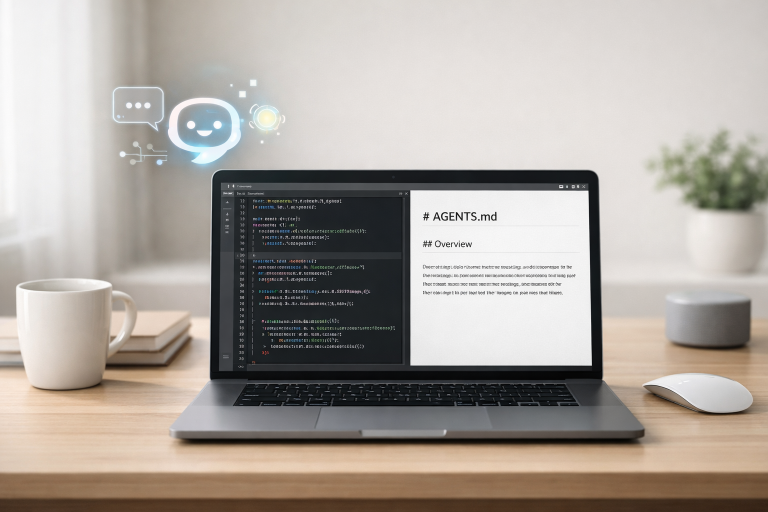

Custom software used to mean a long discovery process, technical specifications, back-and-forth revisions, and a development timeline that could stretch for months. Today, AI-powered natural language tools are changing that process in a major way. Instead of translating every idea into technical jargon first, businesses can describe what they need in plain English and use AI to help shape everything from internal tools to customer-facing features. That shift is making custom software faster to plan, easier to discuss, and more accessible to small businesses that need practical digital solutions without enterprise-level budgets.
For website owners, entrepreneurs, and growing teams, this matters. Whether you are trying to improve your online ordering process, automate admin work, build a client portal, or create a better workflow for your team, AI can now act as a bridge between business goals and technical implementation. It does not eliminate the need for skilled developers, but it does change how software gets imagined, scoped, and built.
What “Talking Your Way” to Software Actually Means
At its core, AI-assisted software development lets users describe a problem or desired outcome in everyday language and have a system help generate a starting point. That could mean writing a feature specification, creating a wireframe, drafting database logic, generating code snippets, or even producing a prototype application.
Instead of saying, “We need a CRM with relational data models and webhook automation,” a business owner can say:
“I need a simple customer tracking tool that stores contact details, shows appointment history, sends reminders, and lets staff assign follow-up tasks.”
An AI tool can then help translate that request into a product outline, suggested workflows, and sometimes a usable first version. For small businesses, this makes the process far less intimidating. It also helps non-technical stakeholders contribute meaningfully without needing to speak in programming terms.
Why AI Is Speeding Up Custom Development
One of the biggest advantages of AI-powered natural language tools is speed. Traditional custom development often requires a lengthy discovery phase before any code is written. AI shortens that gap by quickly turning rough ideas into structure.
1. Faster requirements gathering
Instead of multiple meetings just to define the scope, AI can help capture the first draft of user stories, feature lists, and workflow diagrams. That gives teams a starting point much sooner.
2. Rapid prototyping
Developers can use AI to generate sample interfaces, starter code, and test logic. This can dramatically reduce the time it takes to get from concept to a working prototype.
3. Easier revisions
Business needs change. AI tools make it easier to update instructions, refine outputs, and test alternatives without restarting the entire development process.
4. Better collaboration
When everyone can review a plain-language description of the project, communication improves. Owners, managers, and technical teams can compare notes on the same page instead of interpreting separate jargon-heavy documents.
AI does not replace good planning. It makes planning more accessible, more iterative, and much faster to refine.
How This Improves Collaboration Between Technical and Non-Technical Teams
One of the most frustrating parts of custom software projects has always been translation. Business stakeholders know what problem they want to solve, but not always how to explain it in technical terms. Developers know how to build the solution, but may not fully understand the day-to-day business pain behind the request.
Natural language AI reduces that distance.
A non-technical owner can say, “I want customers to book an appointment, pay a deposit, get a confirmation email, and receive a reminder text 24 hours before their visit.” An AI tool can help break that into a workflow, suggest integrations, and create a checklist for implementation. The developer can then validate the logic, improve security, and ensure the solution fits the existing website or hosting environment.
This kind of shared language is especially valuable for small businesses that may not have a full IT department. It allows owners, assistants, marketers, and developers to all contribute to a project more effectively.
Real-World Use Cases for Small Businesses
AI-assisted custom software is not just for large teams or SaaS startups. It is especially useful for small businesses that need focused, practical tools.
Client intake and onboarding
A service-based business can use AI to help build a custom intake form that collects the right information, routes leads to the right staff member, and triggers follow-up emails automatically.
Scheduling and reminders
Salons, consultants, repair companies, and medical-adjacent businesses can describe their scheduling needs in plain language and generate tools that manage appointments, reminders, deposits, and cancellations.
Internal inventory or job tracking
Businesses with physical products or ongoing service jobs can use AI to outline systems that track orders, materials, deadlines, and staff assignments.
Customer portals
A small business may want clients to log in, view invoices, access files, or check the status of a project. AI can help define the structure of a secure portal and suggest the user flow.
Reporting dashboards
Instead of manually pulling reports from multiple sources, a team can use AI to help design a dashboard that surfaces sales, traffic, leads, or customer activity in one place.
Website operations and content workflows
For businesses running WordPress or another CMS, AI can help streamline content approvals, SEO tasks, plugin recommendations, backup schedules, and support ticket routing.
Benefits Beyond Speed
While faster development gets the most attention, the broader value of AI in custom software is accessibility. More people can participate in the process, and more ideas can be tested quickly.
- Lower barrier to entry: Businesses can explore custom tools without needing a technical background from day one.
- Better idea validation: Owners can test a concept before committing to a full build.
- Improved budgeting: Faster scoping can reduce wasted time and help narrow the project more accurately.
- More flexibility: Teams can revise and adapt software as the business evolves.
- Stronger alignment: Everyone can review the same natural-language description of the solution.
For small businesses, this can mean the difference between “we should automate this someday” and “we built a useful tool this month.”
What AI Still Cannot Do Well on Its Own
Despite the excitement, AI is not a complete replacement for engineering expertise, security planning, or product judgment. It is a powerful assistant, not an autonomous business analyst or developer.
It can misunderstand context
AI may produce a technically correct result that still misses the operational reality of the business. For example, a booking tool may work on paper but fail to account for staff availability, service duration, or cancellation rules.
It can generate insecure or fragile code
If AI-generated code is deployed without review, it can introduce security vulnerabilities, inefficiencies, or compatibility issues. This is especially important for businesses handling customer data, payments, or login systems.
It still needs human decision-making
Someone must decide what matters most: speed, usability, compliance, ownership, scalability, or integration with existing systems. AI can suggest options, but humans must make the tradeoffs.
It does not replace long-term maintenance
Software is not finished the day it launches. Updates, backups, monitoring, and version control still matter. If a business wants stable tools, it needs a reliable hosting and support foundation behind them.
Why Hosting and Ownership Still Matter
As AI makes custom software easier to generate, ownership becomes even more important. A tool is only useful if you control where it lives, how it is secured, and how it grows over time. That means the hosting environment, backup strategy, and access permissions are just as important as the code itself.
For small business owners, the best setup is usually one that gives you control over your data, your domain, and your content while still supporting modern AI-assisted workflows. Whether you are building a client portal, a custom WordPress feature, or a lightweight business application, you want a system you can actually manage and keep.
That is especially relevant for businesses that value true ownership of their web data. A custom tool should not trap you in a platform you cannot export from or control. It should fit your business, not the other way around.
How Small Businesses Should Approach AI-Assisted Custom Software
If you are considering an AI-supported development project, start with the business problem instead of the technology. That keeps the project focused and helps the final solution deliver real value.
- Define the outcome: What process do you want to improve or replace?
- List the must-haves: Which features are essential for day one?
- Identify integrations: Should the tool connect to your website, email, payment processor, CRM, or calendar?
- Decide who will use it: Staff, customers, contractors, or all three?
- Plan for security and backups: Where will the data live, and how will it be protected?
- Build in phases: Launch the simplest useful version first, then improve it over time.
This approach works well because it keeps the project grounded. AI can help you move from idea to outline to prototype quickly, but the real value comes from solving one business problem at a time.
How This Shift Is Changing the Digital Landscape
AI-powered natural language tools are not just speeding up software development; they are changing who gets to build. Small business owners no longer need to wait until they have a big budget or a technical cofounder to start improving their systems. They can participate in the design process earlier, communicate more clearly, and get to a useful first version faster.
That shift is especially important in a world where online operations are tied to growth. Businesses need websites, forms, automations, databases, and customer tools that work together reliably. AI can help make those tools more attainable, but the best results still come from combining smart prompts, strong hosting, good planning, and human oversight.
Key Takeaways
- AI natural language tools make custom software faster to scope, prototype, and revise.
- Business owners can describe needs in plain English and collaborate more easily with developers.
- Small businesses can use AI-assisted software for scheduling, intake, portals, dashboards, and workflow automation.
- AI improves accessibility, but it still requires human review for security, accuracy, and business fit.
- Hosting, backups, and data ownership remain essential as custom tools become easier to build.
Frequently Asked Questions
Can AI really build custom software from a plain-English description?
AI can create a strong starting point, including outlines, prototypes, and code suggestions. In most cases, a skilled human still needs to review, refine, and deploy the final solution.
Is AI-assisted development only useful for large businesses?
No. Small businesses often benefit the most because AI can reduce planning time, lower the technical barrier, and help them build practical tools without a large internal team.
What types of business tools are best suited for this approach?
Workflows, intake forms, booking systems, dashboards, client portals, and internal admin tools are all strong candidates for AI-assisted development.
What are the biggest risks?
The main risks are inaccurate assumptions, insecure code, poor planning, and overreliance on automation without human review. Data ownership and hosting quality also matter.
Do I still need a developer if I use AI?
For anything beyond a simple prototype, yes. AI can accelerate the process, but developers are still important for structure, security, integrations, and long-term maintenance.
Ready to Build Smarter?
AI is making custom software more approachable than ever, but the real advantage comes from pairing that speed with reliable hosting, thoughtful planning, and a clear understanding of your business goals. If you are ready to improve your website, streamline operations, or build a tailored digital tool, start with a platform that supports ownership and growth.
Dark Horse Virtue helps small businesses and entrepreneurs build on a foundation they control. If you want practical hosting, better site management, and support for modern AI-powered workflows, explore your options and take the next step toward a solution that fits your business.